As Black History Month comes to a close, we reflect on legacy, resilience, and responsibility. Black history is not only about what our ancestors survived, but it is also about what we choose to build today. It is about the futures we dare to imagine and the systems we work to transform.
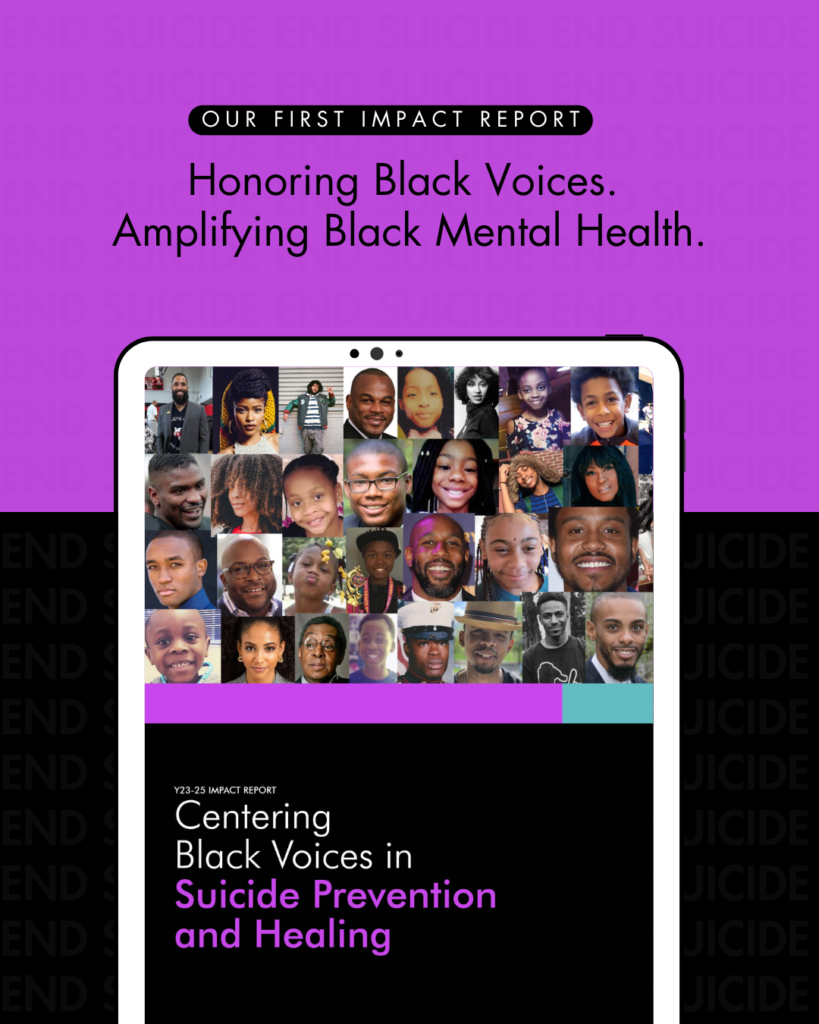
That is why we are honored to share a major milestone: the release of our very first Impact Report.
This report represents more than organizational growth. It represents lives touched. Conversations that once felt impossible, now happening openly. Safe spaces created for people navigating grief, trauma, suicidal thoughts, and mental health challenges. It represents the courage of individuals who show up vulnerably and the commitment of a community determined to break cycles of silence.
At Black People Die By Suicide Too, our mission has always been rooted in one truth: Black lives deserve care, compassion, and culturally responsive support. For too long, suicide and mental health struggles in Black communities have been minimized, misunderstood, or hidden behind stigma. We exist to challenge that silence.
Over the two and a half years, because of your support, we have:
- Expanded access to peer-led support spaces
- Increased mental health literacy through workshops and community conversations
- Amplified culturally grounded narratives about healing and help-seeking
- Built partnerships that strengthen our capacity to serve
Every number in this report has a story behind it. Every workshop reflects someone choosing to learn. Every support group reflects someone choosing to stay. Every partnership reflects someone believing that this work matters.
Black History Month reminds us that change is collective. The progress we celebrate today stands on the shoulders of those who fought for our right to exist fully, not just physically, but emotionally and psychologically. Mental health is a civil rights issue. Access to care is a justice issue. Naming our pain is an act of resistance.
As we look ahead, our commitment remains clear: to create spaces where Black individuals can speak honestly about suicidal thoughts without shame, where healing is culturally grounded, and where community is a protective factor, not an afterthought.
We invite you to read our Impact Report and reflect with us on how far we’ve come, and how far we are going.
Thank you for walking alongside us. Thank you for believing in this work. Thank you for investing in Black healing.
The future we are building is one where no one has to struggle in silence.
You can view the report here.